

CO₂ by Rail
Enabling European Cross-Border Carbon Removal at Scale: A New CO₂ Corridor
Germany, Italy, Switzerland, Austria and Sweden have large volumes of biogenic and industrial CO₂.
Denmark has some of Europe’s largest storage potential.
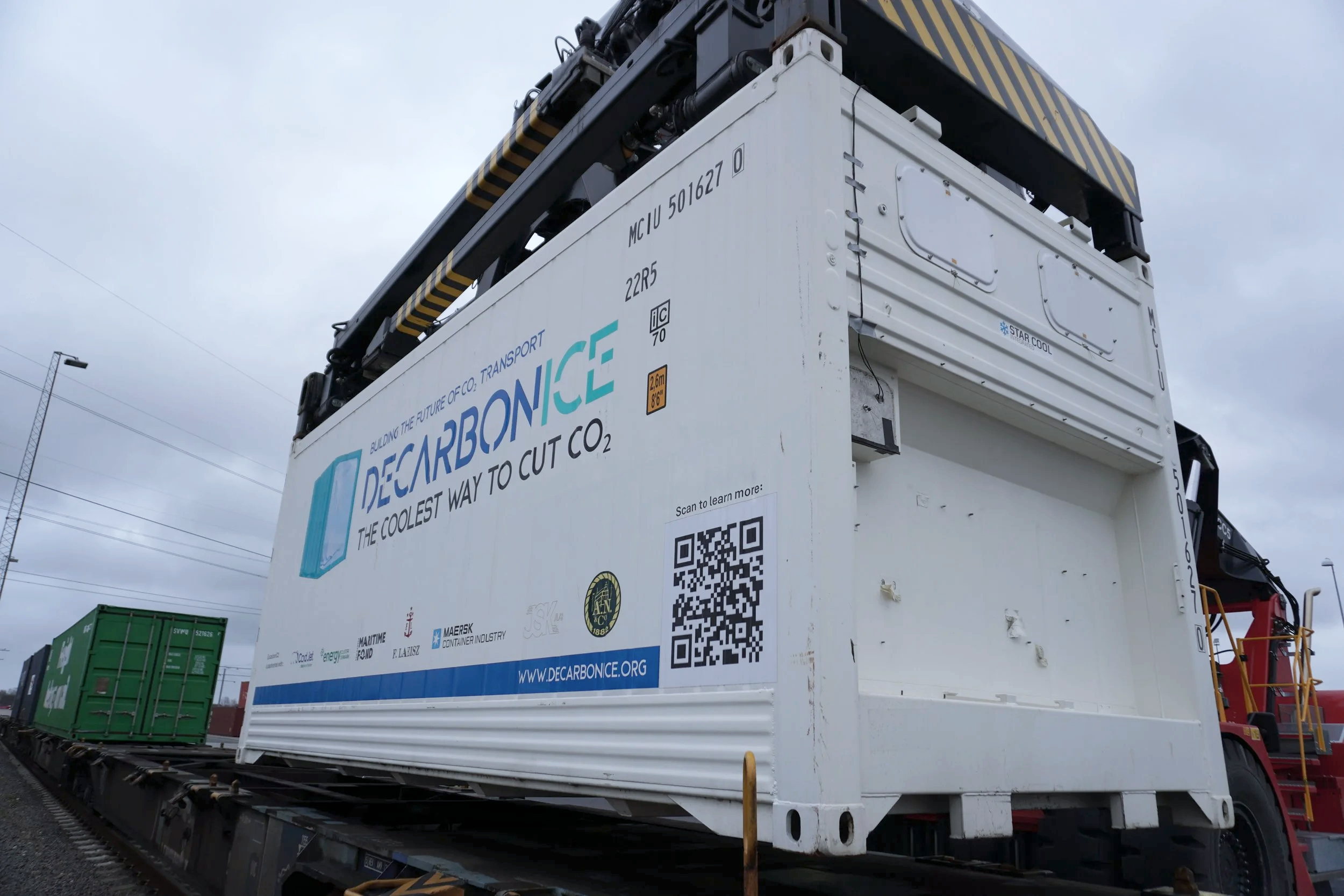
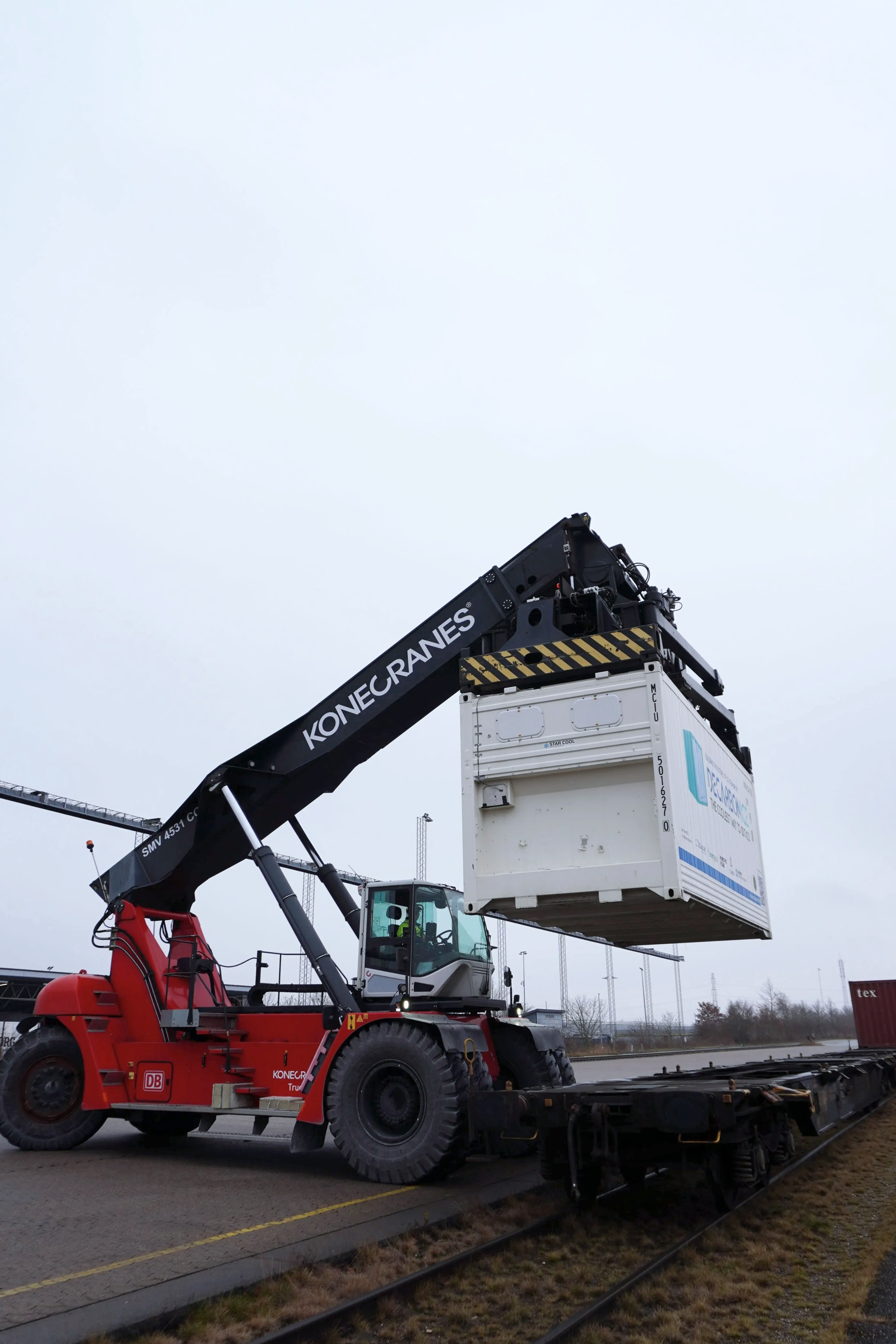
DecarbonICE connects Emitters with Storage sites.
By transporting solid CO₂ (dry ice) in standard 20-foot containers by train, we enable:
Large-scale CO₂ import into Denmark
Cost-efficient long-distance transport
Safe and flexible cross-border logistics
Rapid scaling without pipeline infrastructure
Rail + solid CO₂ is the missing link in a European CO₂ network.
Why Rail for CO₂?
Rail is ideal for medium- and long-distance transport.
Compared to road:
Lower cost per ton at distance
Lower emissions per ton transported
Fewer bottlenecks
Higher volume per shipment
Reduced traffic impact
For import from Central Europe (Germany, Italy, Switzerland and Austria) and Sweden to Denmark, rail becomes the natural backbone of CO₂ logistics.
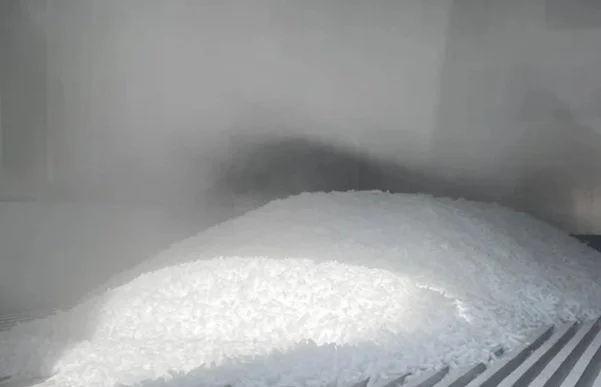
Solid CO₂ Changes the Game
Flexible: Standard intermodal infrastructure
Efficient: 20” insulated deacrbonICE containers
Safe: Atmospheric pressure operation
Traditional liquid CO₂ transport by rail requires:
Pressurised tank wagons
Specialised terminals
Heavy infrastructure
Large minimum volumes
DecarbonICE uses:
Standard intermodal container train wagons
Modified 20” insulated containers
Atmospheric pressure operation
Simple and fast loading/unloading
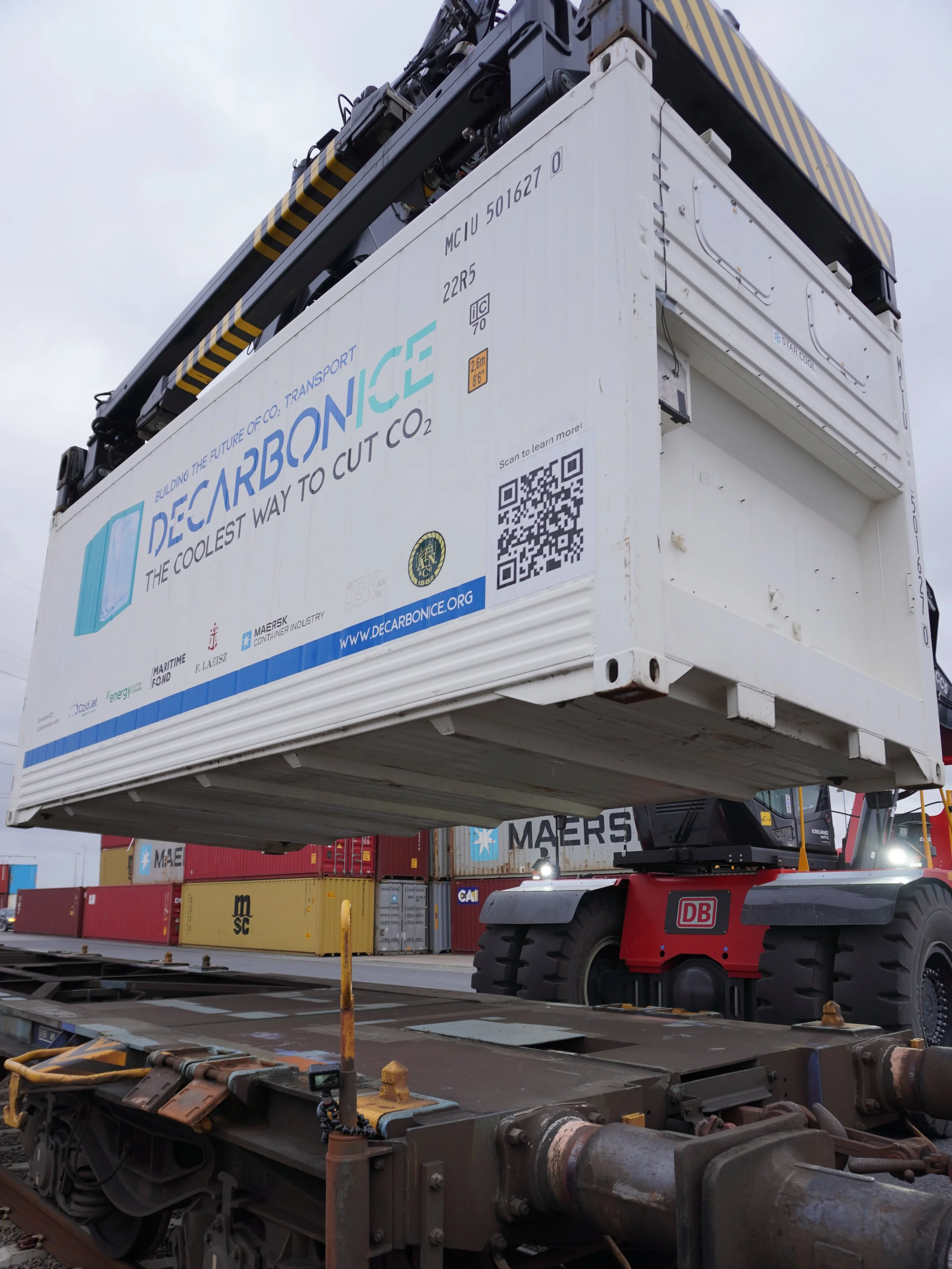
This makes the system:
Modular
Flexible
Scalable
Compatible with existing rail freight networks
No need for a dedicated CO₂ rail tank fleet.
Solid CO₂ in DecarbonICE containers can move seamlessly:
Biogas plant → Truck → Rail terminal → Train → (Port) → Storage hub (on- or offshore)
01
No repumping
02
No pressure transfer
03
No intermediate tanks
Reduces
Handling losses
Reduces
Complexity
Reduces
Risk/Cost
Strategic Opportunity: Germany & Sweden → Denmark

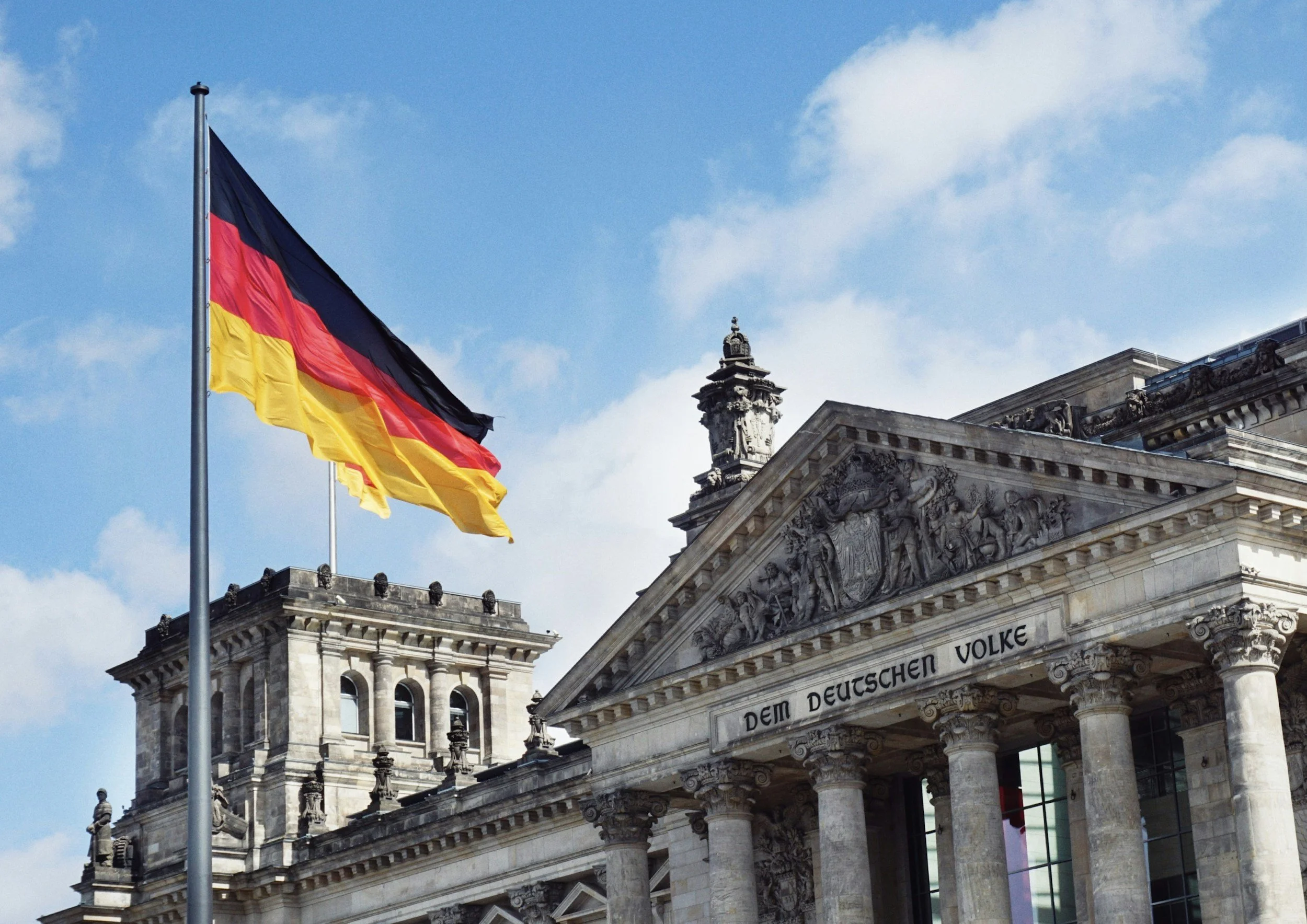
Germany
Large biogas sector
Strong industrial base
Limited domestic CO₂ storage options
High carbon prices
Denmark offers:
Offshore storage: Greensand (2027), Bifrost (2031), Ines(2035)
Onshore storage development, operaitonal 2030
Established CO₂ hub development
Political alignment on CCS
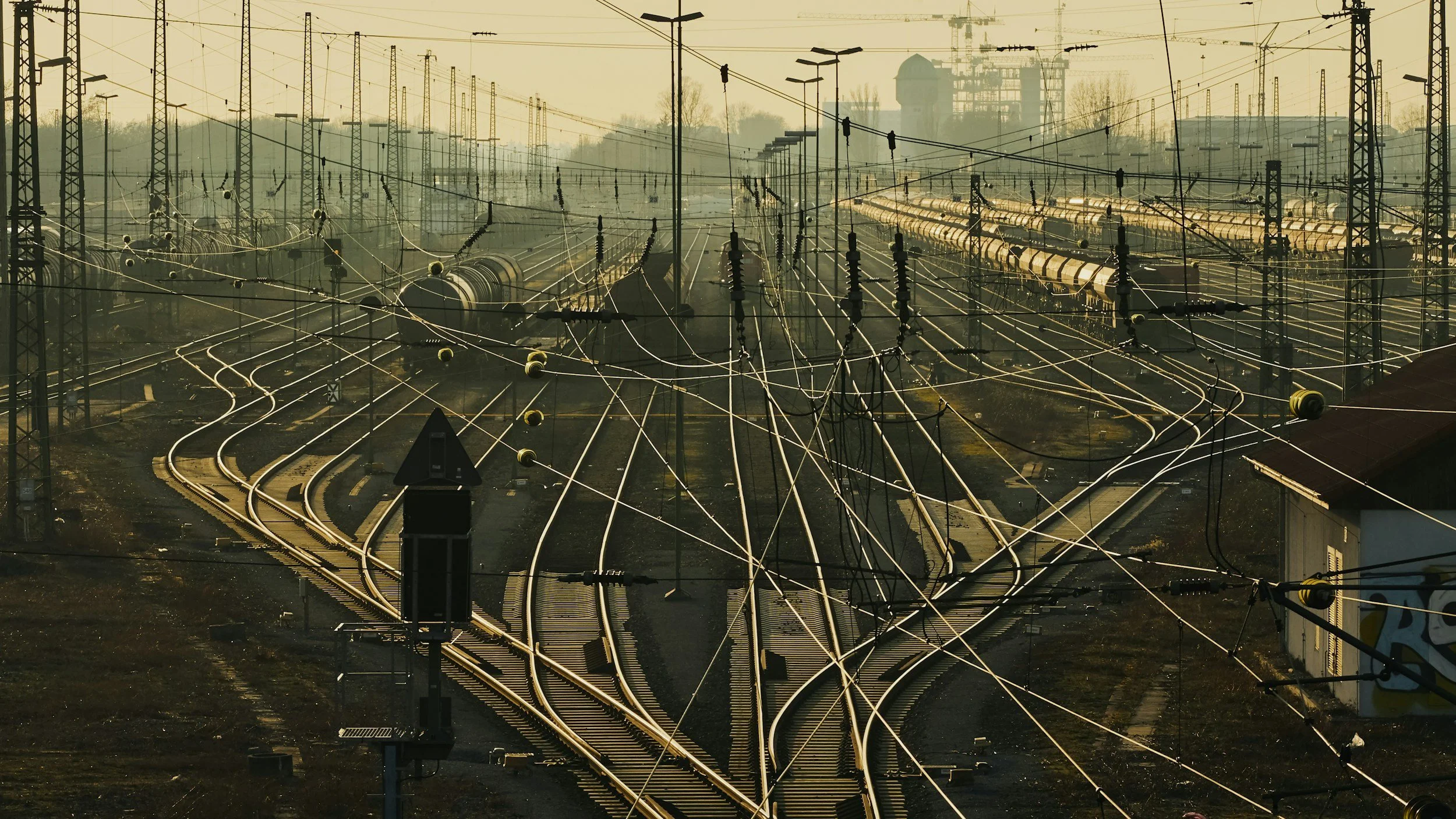
Electrical Rail corridors already exist between Northern Germany and Jutland.
Sweden
Significant biogenic CO₂ from pulp & paper
National carbon removal ambitions
Limited offshore storage
Direct rail-to-port transport into Denmark is a scalable pathway for Swedish BECCS projects.
The numbers: Why Rail + Solid Wins
Lower CAPEX vs Liquid Rail Tanks
1
No need for specialised pressurised tank wagons.
Lower Infrastructure Requirements
2
Standard container terminals can be used.
Flexible Volume Scaling
3
Start small (a few containers per week). Scale to full train blocks (150 containers).
One train can carry 3.000 tons of CO₂ depending on configuration.
Competitive €/t at Distance
4
Rail cost per ton decreases significantly as distance increases.
The longer the route, the stronger the business case.
Dangerous Goods
5
Requirements for the transport of dangerous goods are not in force.
Safety Advantage
Solid CO₂ transport operates at atmospheric pressure.
Compared to liquid pressurised systems:
Lower accident severity risk
No high-pressure rupture scenarios
Simpler emergency management (no spill/leak risk at derailing/collision)
Improved public acceptance
This is particularly important in cross-border transport.
Climate Advantage
Rail emits significantly less CO₂ per ton-km than road transport.
Combining:
Biogenic CO₂ capture
Low-emission rail transport
Permanent on/offshore storage
Creates one of the lowest-carbon removal chains in Europe.
Enabling a European CO₂ Market
The EU is moving toward:
Cross-border carbon transport frameworks
CO₂ infrastructure regulation
Inclusion of removals in ETS
Growing voluntary demand
Rail-based containerised CO₂ transport enables:
Fast market activation
No waiting for pipelines
Lower barrier for first movers
Regional CO₂ hubs
It supports the creation of a Nordic-German CO₂ corridor.